
If you’ve just been in a car accident, the most important thing to know is this: even a low-speed crash can cause real damage to your neck, back, and the muscles that hold them in place. And it’s almost always worse than it looks on day one. Soft-tissue injuries — whiplash, muscle splinting, fascial trauma — frequently take 24 to 72 hours to fully reveal themselves. By the time you wake up Monday morning stiff, the muscles around your injury have already started compensating.
I’ve spent 17 years treating auto-accident injuries in Coeur d’Alene, and I want to walk you through what’s actually happening to your body and what you can do about it.
What a Crash Does to Your Muscles
When your vehicle stops suddenly, your body wants to keep moving. Your head whips forward and then back. Your spine compresses. The muscles in your neck, upper back, and core fire hard to protect you. That protective response — what I call muscle splinting — is essential in the moment.
The problem is that after the crash is over, those guarded muscles often don’t fully turn back on. They stay in a low-grade locked state. Around them, the muscles that should be working start to overcompensate. Inflammation kicks in. Fascia stiffens. Within a week or two, you’re dealing with neck pain, headaches, mid-back stiffness, and a generally tight, “off” feeling that doesn’t go away with rest.
Why a Standard Adjustment Isn’t Enough
If you only get adjusted after a car accident, you’re treating the symptom — the joint that’s now out of position — without addressing why it moved in the first place. The muscles that were guarding during the crash are still offline. They’ll pull the joint right back out within a few days.
That’s why so many post-accident patients I see have been adjusted weekly for months with no real progress. The mechanical fix doesn’t hold because the soft tissue underneath was never restored.
How I Treat Auto-Accident Injuries
When you come in after a crash, I start with a thorough assessment — your symptoms, the mechanics of the accident, and a full muscle and movement screen to find every muscle that’s gone offline and every joint that’s restricted.
Then I work in this order:
- Muscle Therapy to wake up the muscles that have been splinting since the crash.
- Myofascial release to break up the fascial tightness and restore tissue glide.
- Gentle Activator Method adjustments — no twisting or cracking, which matters a lot when your neck is already aggravated — to free up restricted joints.
- Shockwave therapy when there’s chronic tendon or ligament injury that isn’t responding to manual care.
The whole approach is built to address both the immediate damage and the long-term compensation patterns that drive chronic post-accident pain.
A Few Practical Tips
- Get evaluated within the first week, even if you feel “mostly okay.” Soft tissue injuries declare themselves slowly, and early treatment dramatically shortens recovery.
- Document everything. If there’s a personal injury claim or insurance involvement, an evaluation on the record matters.
- Don’t wait for the pain to be unbearable. Whiplash and muscle splinting that get treated in the first month resolve far faster than chronic patterns left alone for six months.
If you’ve been in an accident in Coeur d’Alene, Post Falls, Hayden, or Rathdrum, book an evaluation or call (208) 551-5922. I’ll spend a full hour with you, find every muscle and joint that needs attention, and start you on a real recovery plan.
Tags:
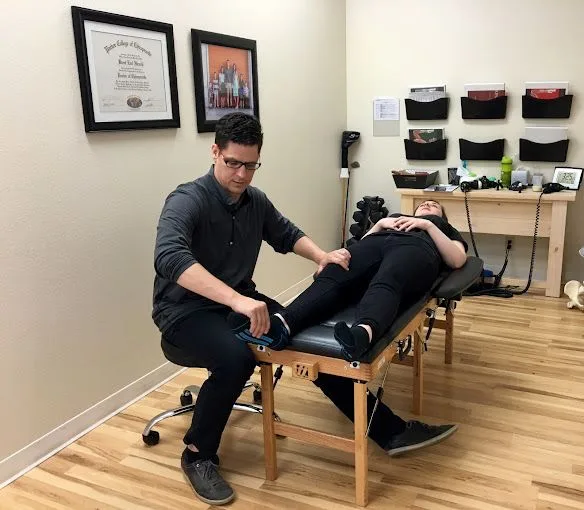
Dr. Brent Hirschi
Owner & Chiropractor
D.C.
Ready to Get Started?
Contact us today — we're here to help.