
If you’ve been dealing with sciatic pain for months, you’ve probably already tried a few things. Maybe stretching. Maybe an adjustment that helped for a few days. Maybe an injection that quieted things down for a few weeks before the burning came back. I see this pattern constantly in my Coeur d’Alene practice, and the reason is almost always the same: nobody addressed the muscles that were pinching the nerve in the first place.
What Sciatica Actually Is
“Sciatica” describes a symptom, not a diagnosis. It’s the radiating pain — burning, electric, sometimes numb — that travels from your low back through your glute, down the back of your leg, and sometimes all the way to your foot. The sciatic nerve is the largest nerve in your body, and it can get irritated in a lot of places along its path: the lumbar spine, the piriformis muscle deep in the glute, even the muscles around the hamstring.
When a chiropractor adjusts your spine for sciatica, they’re trying to take pressure off the nerve at the spinal level. That works — sometimes. But if a muscle along the rest of the nerve’s path is the actual culprit, the adjustment can’t reach it. The pain comes back as soon as that muscle tightens up again.
How I Approach Sciatica Differently
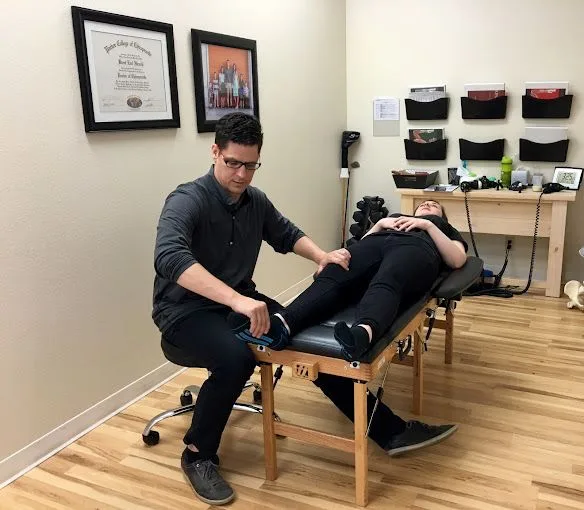
Before I touch your spine, I want to know exactly where the nerve is being squeezed. So I start with a full muscle assessment — testing the muscles in your low back, glute, hip, and hamstring to find which ones have shut down and which ones are compensating by overworking and tightening. That’s almost always where the real problem lives.
Then I use Muscle Therapy to reactivate the muscles that aren’t firing. I follow that with myofascial release on the over-tightened ones — usually the piriformis or the deep glute muscles that are pressing into the nerve. Only then do I deliver a gentle Activator adjustment to your lumbar spine and pelvis.
When you fix the muscles first, the adjustment actually holds, and the nerve gets the room it needs to calm down. That’s the whole game.
What You Can Expect
Most patients with sciatic pain feel meaningful relief inside the first three or four visits. Full resolution typically lands within the 6–10 visit window I tell most patients to plan for. After that, you’re not booking weekly appointments forever — you’re done, with the option to come back if life throws something at you.
If you’ve already been through the usual round of stretching, ibuprofen, and “see if it gets better in a few weeks,” and your sciatic pain is still there, come see me. There’s a better path than chasing the symptom.
Schedule a visit or call (208) 551-5922.
Tags:
Dr. Brent Hirschi
Owner & Chiropractor
D.C.
Ready to Get Started?
Contact us today — we're here to help.