
Most people assume muscle problems are obvious. You pull something, it hurts, you rest, it heals. End of story. But the truth is a lot messier — and a lot more common than people realize. Muscles can quietly go offline without any dramatic injury, and when they do, the whole system has to compensate. Over time, that compensation is what turns into the kind of chronic, nagging pain that drives people to Google “chiropractor Coeur d’Alene” at 10 PM on a Sunday night.
At Muscle Works, we use Muscle Therapy to find and reactivate those shut-down muscles. But before you make an appointment, here are five common signs that one or more of your muscles may be inhibited — and what you can do about it.
1. Chronic Tightness That Never Goes Away
You stretch it. You foam-roll it. You get a massage. It feels great for an hour, then the tightness comes back within a day.
This is the classic calling card of an inhibited muscle nearby. When a muscle goes offline, the surrounding muscles tighten to compensate and protect the area. No amount of stretching or massage on the tight muscle will fix it — because the tight muscle isn’t the problem. It’s doing its best to hold together a system that’s missing a key player.
What to do: Don’t give up on stretching, but recognize that if a muscle stays tight for weeks or months no matter what you do, something else is going on. A Muscle Therapy assessment can identify which nearby muscle is actually causing the compensation.
2. Obvious Left-Right Asymmetry
Reach both arms overhead. Is one side noticeably more restricted than the other? Do a single-leg balance — is one side wobbly while the other is steady? Step up onto a box or curb — does one leg take the load and the other feel awkward?
Small asymmetries are normal. Large, persistent ones are a clue that specific muscles on one side have stopped doing their job. Your body is remarkable at hiding weakness by shifting load to the stronger side — so by the time you notice the asymmetry, it’s usually been developing for a while.
What to do: Pay attention to which side feels “off” and in what positions. That information is gold for a Muscle Therapy assessment. At Muscle Works in Coeur d’Alene, Dr. Hirschi uses specific range-of-motion and muscle tests to isolate exactly which muscles are inhibited on the weak side.
3. Pain That Moves Around
Last month it was your right hip. Then it was your lower back. Now it’s your left knee. You can’t figure out why you keep getting hurt in different places — you’re not doing anything crazy, you’re just going about your life.
This is a huge red flag for a muscle inhibition pattern. When one muscle shuts down, the system compensates. The compensation causes strain in a new place. You rest that, it gets a little better, but the original inhibition was never fixed — so the compensation just moves to a different muscle or joint. The pain doesn’t go away; it relocates.
What to do: Stop chasing the most recent pain. Start looking for the upstream cause. This is exactly the kind of case where Muscle Therapy shines — it traces the chain of compensation back to the original weak link.
4. Surprising Weakness in Simple Movements
You used to be able to carry groceries without thinking about it. Now your forearms fatigue halfway to the car. You used to get up off the floor easily. Now it’s a production. You used to run errands without back tightness. Now everything feels heavy.
Some of that is normal aging. A lot of it isn’t. Sudden or noticeable weakness in everyday movements — especially weakness that doesn’t match how much activity you’ve been doing — is often a sign that specific stabilizing muscles have gone offline. Your bigger muscles are taking on more and getting fatigued faster because the supporting cast isn’t pulling its weight.
What to do: Don’t just try to “work through it” or lift more weight in the gym. Working out on top of an inhibited muscle usually just reinforces the compensation pattern. Identify the weak muscle first, reactivate it, then build strength. That’s the right order.
5. Injuries That Keep Coming Back to the Same Spot
You tweaked your low back last spring. It healed. Then you tweaked it again in the fall, in a totally different situation. And again in the winter, bending down to tie your shoes. Each time, it’s the same area. Each time, you rest and recover — but it keeps happening.
Recurring injuries in the same region almost always point to a persistent inhibition pattern. The muscle isn’t healing all the way. Or a nearby muscle that should be sharing the load is offline, so every time you load that area, it’s doing the work of two muscles and eventually giving out again.
What to do: Stop accepting that “my back just does this” or “my knee just flares up sometimes.” It doesn’t have to. A Muscle Therapy assessment can find the underlying cause and address it, so the next sprain or strain isn’t waiting around the corner.
What to Do Next
If two or more of these signs sound familiar, your muscles might be telling you something. The good news is that Muscle Therapy is specifically designed to identify and fix this kind of inhibition — and at Muscle Works in Coeur d’Alene, it’s what Dr. Hirschi does every day.
Read more about Muscle Therapy, or if you’re ready to find out what’s going on with your own body, schedule your visit. You can also reach us at (208) 551-5922. We’ll take a real look at what’s happening, explain it in plain English, and build a treatment plan that gets you back to your life — not stuck in endless maintenance visits.
Tags:
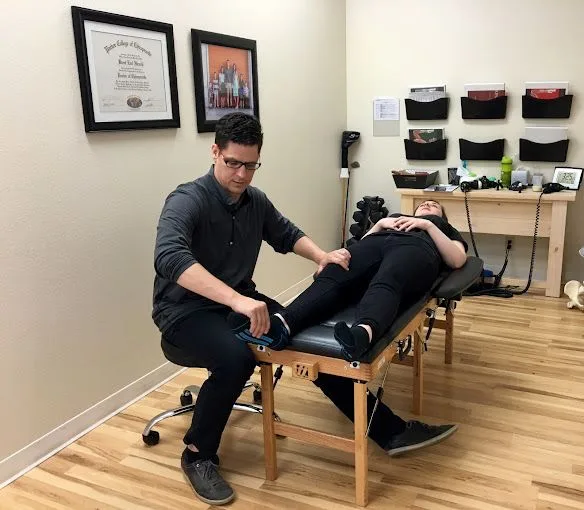
Dr. Brent Hirschi
Owner & Chiropractor
D.C.
Ready to Get Started?
Contact us today — we're here to help.